Summer dropshipping is not about tossing a few pool floats onto your store and crossing your fingers. The sellers who actually profit treat Q2 and Q3 like a supply chain operation — products sourced by March, listings live by April, and inventory dialed in before the first heatwave hits.
China remains the engine behind the most profitable summer products on Shopify, eBay, and Amazon. The gap between a generic AliExpress haul and a curated, high-margin summer catalog? Knowing what sells, where to source it factory-direct, and how to wrap a commodity product in enough branding that price becomes an afterthought.
This guide maps 12 summer products to their factory-cost origins in China, breaks down a seasonal sourcing timeline, and walks through the quality control and branding moves that keep your margins intact when everyone else is racing to the bottom.
Why Summer Products from China Are a Goldmine in 2026
The Numbers Behind the Season
Summer seasonal products follow a predictable spike that sharp sellers bank on every year. Google Trends data shows searches for “portable neck fan,” “cooling towel,” and “solar string lights” all hit annual peaks between May and July — with 2026 signals already tracking above 2025 baselines.
The seasonal window is narrow but rich. A well-timed summer catalog of 10-12 products sourced from China can deliver $8,000 to $20,000 in revenue across four months. Cooling, outdoor, and fitness recovery products consistently yield 40-60% gross margins when sourced factory-direct — not dropshipped through platform middlemen.
The China Supply Chain Advantage
Here is what most summer dropshipping guides skip: buying from AliExpress or CJ Dropshipping means eating two to three layers of markup before the product touches your customer. That portable neck fan priced at $6.50 on AliExpress? It left a Shenzhen factory at $2.80.
Direct China sourcing — through 1688.com, factory-direct negotiation, or a dedicated product sourcing agent — strips those layers out. For seasonal products where per-unit cost determines whether Q3 ends in profit or a storage-unit headache, that margin gap is everything.
Top 12 Summer Products to Dropship from China in 2026
These products are grouped by demand pattern and China sourcing viability. Factory costs are based on direct supplier quotes from Guangdong and Zhejiang manufacturing clusters (June 2026).
Category 1: Cooling & Hydration (May-July Peak)
| Product | Factory Cost | Retail Price | Gross Margin | Why It Moves |
|---|---|---|---|---|
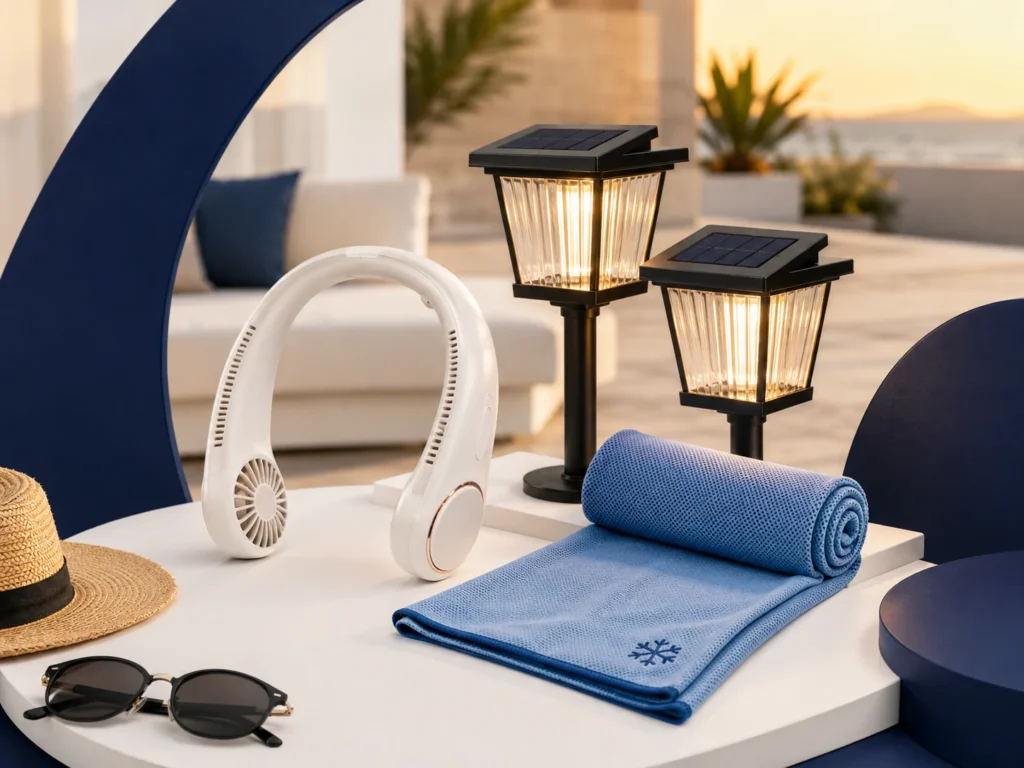
| USB Portable Neck Fan | $2.80-$4.50 | $19.99-$29.99 | 55-65% | Hands-free cooling. Office-to-outdoor crossover. TikTok viral category. |
| Cooling Sports Towel (3-Pack) | $1.80-$3.20 | $14.99-$19.99 | 50-60% | Ultra-light shipping. High impulse-buy rate at checkout. |
| Insulated Tote Bag with Ice Pack | $5.50-$8.00 | $29.99-$39.99 | 50-55% | Higher AOV. Beach, picnic, grocery — three use cases in one SKU. |
| Portable Misting Fan (USB Rechargeable) | $4.20-$7.00 | $24.99-$34.99 | 45-55% | Fan plus misting in one device. Parents and outdoor workers are the core buyer. |
Sourcing angle: Neck fans and cooling towels are the definition of commoditized on AliExpress. The play is source factory-direct from Guangdong (where 80% of small electronics are manufactured) and differentiate with custom colorways, bundled accessories, or branded packaging. A neck fan in matte black with a silicone carry case sells for $29.99. The white-label version in a plastic bag? $14.99.
Category 2: Outdoor & Garden (April-August Peak)
| Product | Factory Cost | Retail Price | Gross Margin | Why It Moves |
|---|---|---|---|---|
| Solar Pathway Lights (6-Pack) | $4.50-$7.50 | $24.99-$34.99 | 45-55% | Homeowner staple. Repeat purchases from the same buyer over multiple seasons. |
| Pop-Up Beach Tent (UV50+) | $8.00-$14.00 | $49.99-$69.99 | 55-65% | Higher ticket, family buyer, strong upsell potential for accessories. |
| Compact Hammock with Stand | $12.00-$18.00 | $49.99-$69.99 | 50-60% | “Backyard staycation” trend drives demand. Higher AOV offsets shipping cost. |
| Waterproof Bluetooth Speaker (IPX7) | $6.00-$10.00 | $29.99-$39.99 | 50-55% | Year-round potential beyond summer. Pool, beach, camping, shower. |
Sourcing angle: Solar lights and outdoor decor cluster in the Yiwu and Zhongshan manufacturing regions. Quality variance is enormous — a $4.50 pathway light and a $7.50 unit look identical in product photos but differ in LED lifespan, battery quality, and weather sealing. This product category is where quality control inspection pays for itself inside a single season.
Category 3: Fitness & Recovery (Year-Round Demand, Summer Bump)
| Product | Factory Cost | Retail Price | Gross Margin | Why It Moves |
|---|---|---|---|---|
| Adjustable Stretch Board | $6.00-$9.00 | $29.99-$39.99 | 45-55% | Home gym staple. Not summer-only — content marketing gold for fitness accounts. |
| Mini Percussion Massage Gun | $8.00-$14.00 | $39.99-$59.99 | 50-60% | Recovery trend still growing. Strong unboxing content drives organic reach. |
| Breathable Posture Corrector | $2.50-$4.50 | $19.99-$24.99 | 55-60% | Desk worker pain point. Under 200g shipping weight, high reorder rate. |
| Resistance Band Set (5-Piece) | $3.00-$5.00 | $19.99-$29.99 | 50-55% | Entry-level fitness. Travel-friendly. Bundle with a digital workout guide for higher AOV. |
Sourcing angle: Fitness accessories from China have two tiers. The bottom tier — unbranded, generic packaging, race-to-the-bottom pricing. The upper tier — OEM with custom logo, branded box, QR code linking to workout content. That mini massage gun at $8-14 factory cost? It sells for $50+ with branded packaging and a custom travel case.
How to Source Summer Products from China Without Getting Burned
1688 vs Alibaba vs Sourcing Agents
Most new dropshippers default to AliExpress. That works for testing one or two units. At scale, it annihilates your margin.
1688.com is the wholesale platform where AliExpress sellers buy their inventory. Prices run 30-60% lower, but the platform is Chinese-language only and requires a mainland China bank account for payment. A product sourcing service bridges this — you provide product links or specifications, the agent handles supplier vetting, price negotiation, sample procurement, and logistics consolidation.
A good sourcing agent brings something a platform cannot: leverage. They already maintain relationships with factories in your target product categories. They can negotiate MOQs from 500 units down to 100, consolidate shipments from multiple suppliers into one container, and catch quality red flags before products leave China.
Timing Orders: The Single Biggest Seasonal Mistake
Most first-time summer sellers place bulk orders in May, when demand graphs are spiking. By the time inventory arrives, they have missed four to six weeks of peak selling window.
The timeline that works:
- January-February: Identify product candidates. Chinese factories return from Lunar New Year by mid-February.
- March: Order samples from 3+ suppliers per product. Test, compare, select.
- Early April: Place bulk orders. Confirm production and shipping timelines in writing.
- Late April: Receive inventory. Shoot product photos, write listings, prep ad creatives.
- May: Go live. Start ad campaigns. The algorithm rewards new listings with 7-10 days of elevated visibility.
- June-July: Peak sales. Focus on fulfillment speed and customer response time.
- Post-July 20: Never reorder. Leftover summer inventory typically sits until the following May.
Factor Chinese holidays into the timeline. Labor Day (May 1-5) and Dragon Boat Festival (typically June) each delay production by one to two weeks.
Quality Control Checklist for Summer Products from China
Seasonal products create a brutal feedback loop: a defective batch discovered in June means negative reviews during your peak sales window, which tanks conversion rates exactly when traffic is highest. For products coming out of China, a pre-shipment inspection is not negotiable.
Summer Product QC Protocol (minimum):
- [ ] Functionality Test: 100% of electronics (fans, speakers, massage guns) powered on and run for minimum five minutes
- [ ] Water Resistance Verification: IPX-rated products spot-tested — one unit per 50 inspected
- [ ] Material Quality Check: Fabric items inspected for stitching consistency, color accuracy, and chemical odor
- [ ] Packaging Integrity: Drop test for fragile items, moisture barrier verification for electronics
- [ ] Accessory Completeness: Every bundled item counted — charging cables, straps, manuals, mounting hardware
- [ ] Label and Compliance Check: CE, FCC, or RoHS markings verified. Warning labels present where legally required.
- [ ] Photo Documentation: Detailed images of the inspected batch retained for supplier dispute resolution
A professional third-party QC inspection using AQL 2.5 sampling standards costs roughly $200-300 per batch. That is less than the cost of a single chargeback or platform account suspension.
Branded Dropshipping: Turn $3 Products Into $30 Brands
The ceiling on a generic portable neck fan sits around $19.99. Add a custom silicone grip sleeve in three matte colorways, branded packaging with a QR code linking to a setup video, and a thank-you card that does not feel like it was printed by a robot — and that same fan sells for $29.99 with 4.6 stars instead of 4.1.
What Customization Actually Costs (at 200 Units)
| Customization | Added Cost Per Unit | Retail Price Uplift |
|---|---|---|
| Logo print on product body | $0.30-$0.80 | +$2-$5 |
| Custom colorway (MOQ 100 per color) | $0.50-$1.50 | +$3-$8 |
| Branded retail box with insert | $0.80-$2.00 | +$5-$10 |
| QR-coded instruction card | $0.15-$0.30 | +$2-$4 |
| Custom thank-you insert card | $0.10-$0.25 | +$1-$3 |
At 200 units, full branded dropshipping customization adds roughly $1.85-$4.85 per unit. The selling price increase? $13-$30. That spread is your brand equity — and it compounds across every season.
POD: The Zero-Inventory Summer Play
Not every summer product requires upfront inventory. Print-on-demand unlocks a zero-risk angle: custom beach towels with original designs, graphic tank tops with summer-themed artwork, and tote bags featuring seasonal prints. A POD fulfillment partner handles printing and shipping on demand. Your only sunk cost is the design file — and summer-themed designs carry a built-in urgency that generic POD products lack entirely.
Summer Dropshipping Launch Timeline
Two-Wave Strategy
Split your summer launch into two waves to maximize the algorithm visibility boost that new listings receive on Shopify, eBay, and Amazon.
Wave 1 (April 20 – May 10): Cooling products, hydration accessories, lightweight outdoor gear. These are the impulse-driven, lower-AOV items that benefit from being first to market. Early buyer reviews compound fast.
Wave 2 (May 25 – June 10): Higher-ticket outdoor products — hammocks, beach tents, solar lighting sets. Buyers are now fully in “summer spending mode” and willing to commit to larger purchases.
Quick Launch Checklist
- [ ] Product samples received and QC-approved by March 31
- [ ] Supplier contracts confirmed with production and delivery timelines by April 10
- [ ] Product photography complete — minimum five images per SKU, 1600-pixel minimum width, hero shot on pure white
- [ ] Store listings created with keyword-optimized titles and bullet-point descriptions
- [ ] Ad creatives ready — minimum three short-form video variants per product for TikTok and Instagram Reels
- [ ] Inventory received, counted, and spot-checked by May 1
- [ ] Customer support templates written for common summer product issues — battery performance, water resistance claims, size and fit questions
- [ ] Pricing ladder set: launch at 1.8x landed cost, adjust weekly based on sales velocity and competitor movement
FAQ
When should I start sourcing summer products to dropship from China?
January to February. Chinese factories return from Lunar New Year by mid-February and have open production capacity. By March, early movers are placing bulk orders. Waiting until April means competing for production slots, paying rush-order premiums, and risking inventory arriving after your selling window has already opened.
What is better for summer product sourcing — 1688 or Alibaba?
1688 for cost — prices are typically 30-60% below Alibaba for identical products. Alibaba for accessibility — English interface, Trade Assurance, and international payment options. If you cannot navigate Chinese-language platforms or lack a China bank account, a sourcing agent delivers 1688-level pricing without the operational friction.
How do I avoid quality problems with seasonal products from China?
Never order bulk sight-unseen. The sequence that works: request samples from at least three suppliers, test against a written specification checklist, reject any sample that fails a single critical criterion, and only then place a bulk order. For the bulk shipment, a third-party inspection at the factory before container loading is the cheapest margin insurance available.
Can I brand summer dropshipping products without holding inventory?
Partially. For low-MOQ customization categories — neck fans, cooling towels, resistance bands — you can order 100-200 branded units and store them with a fulfillment partner. For true zero-inventory branding, POD products like custom beach towels and graphic tank tops are the play. A branded dropshipping agent handles the middle ground: branded packaging applied per order, shipped direct from a China fulfillment center.
What profit margin should I expect on summer products dropshipped from China?
Factory-direct or via a sourcing agent: 40-60% gross margin after landed costs. Through AliExpress or CJ Dropshipping: 20-35% — the difference is the platform markup layer. An additional 5-15% margin boost comes from branded packaging that supports a higher retail price. Products in the cooling and outdoor categories tend toward the upper end; fitness accessories land in the middle.
How do you handle returns and defects for summer products sourced from China?
Build a 3-5% defect allowance into your unit economics. For electronics and gadgets, negotiate with your supplier to include 2-3% spare units in every shipment — standard practice in Chinese manufacturing. For customer-facing returns, maintain a US-based returns address, whether your own warehouse or a fulfillment partner’s. The alternative — asking customers to ship returns to China — destroys trust and kills repeat purchase rates.
Are there Chinese holidays that affect summer product sourcing timelines?
Yes. The three to watch: Chinese New Year (late January through mid-February — factories shut down completely), Labor Day (May 1-5 — partial shutdowns and shipping delays), and Dragon Boat Festival (typically late May or June — two to three days of disruption). Always add a two-week buffer when your production timeline overlaps with any of these.
Get Your Summer Catalog Moving
Sourcing summer products from China works when you run it like a supply chain, not a shopping list. The sellers who clean up in Q2 and Q3 are rarely the ones with the most listings. They are the ones who sourced early, verified quality before money left the bank, added enough branding to escape the comparison-shopping death spiral, and timed their launch to ride the demand wave instead of paddling after it.
If you need factory-direct supplier connections for your summer catalog, a pre-shipment QC inspection on a bulk order, or help setting up branded packaging for the first time — EPAfulfill handles the China-side operations so you can focus on marketing and sales.
Explore our full range of dropshipping and fulfillment services.